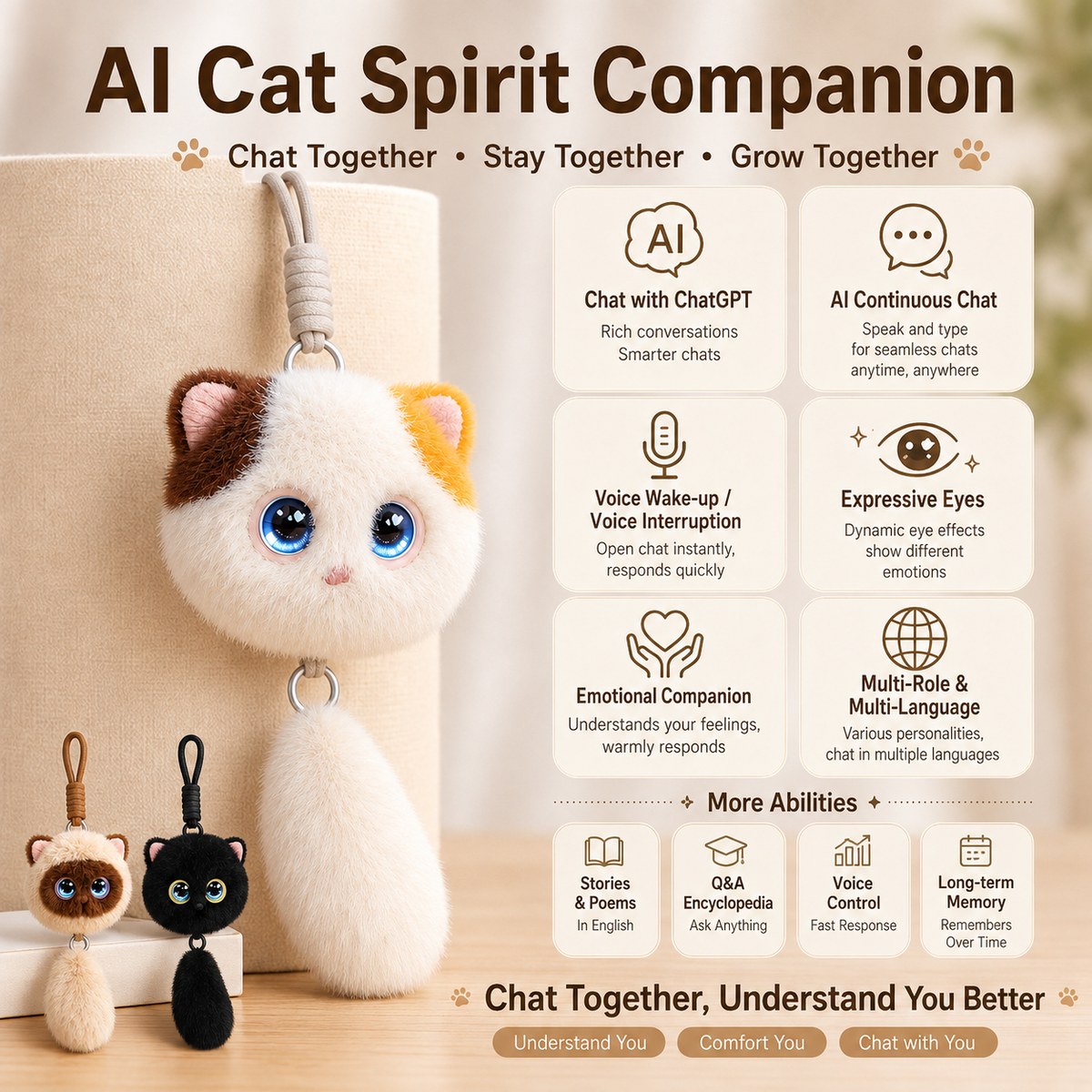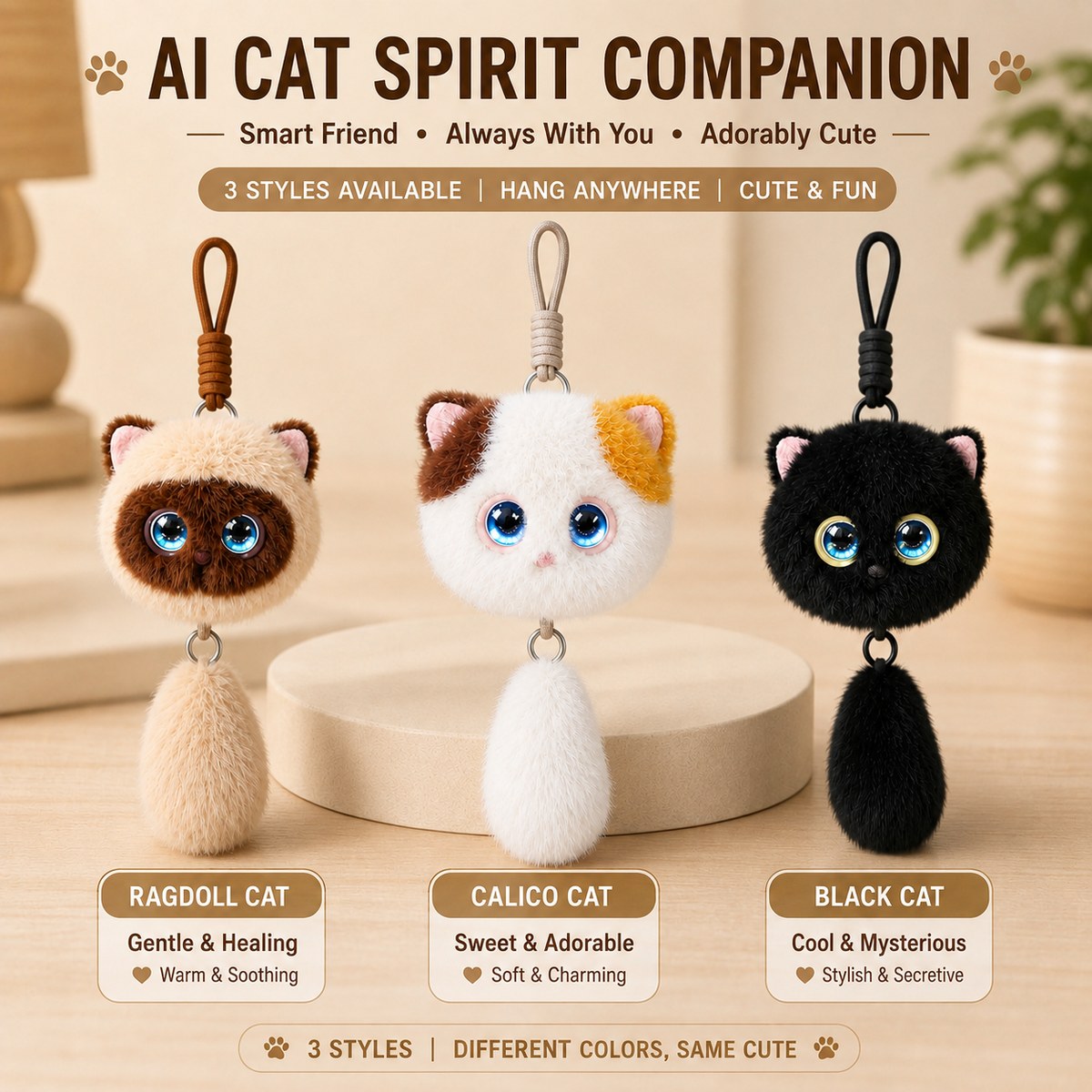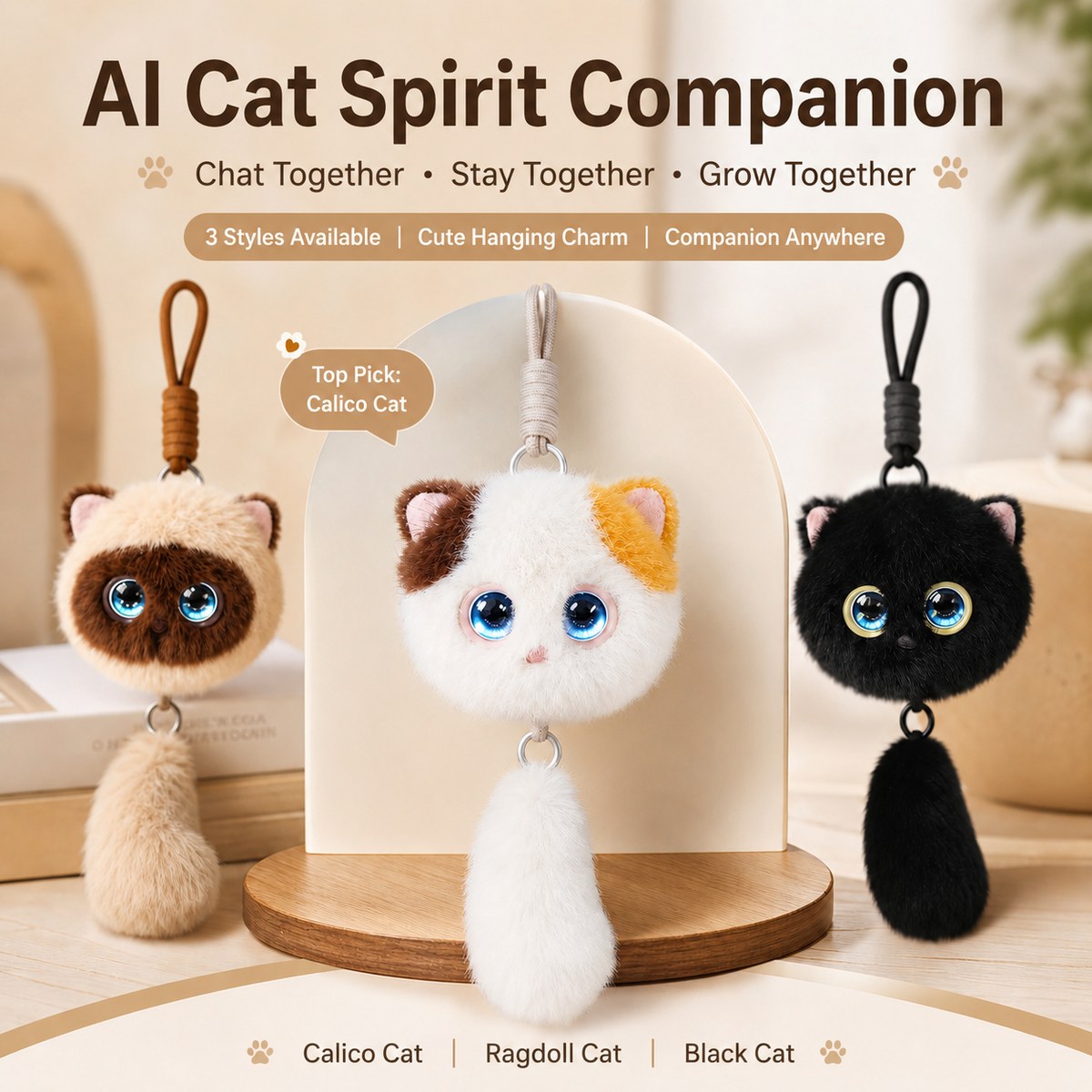
“AI plush toy” gets used loosely. Some products under that label are just a voice chip with fifty pre-recorded phrases. Others hold a genuine conversation, remember what you told them last week, and respond differently depending on how you speak. The gap between those two is wide, and it matters if you are sourcing for a brand.
Here is what is actually happening inside a real AI companion plush toy.
The four parts that matter
1. The language model
This is the difference between scripted and conversational. A traditional talking toy plays back fixed lines. An AI toy sends what the user said to a large language model and generates a fresh response, which is why it can answer a question nobody wrote an answer for.
Our platforms integrate models including ChatGPT and Doubao. The model choice affects response quality, how well it handles non-native accents, and how naturally it handles interruption.
2. The connection
The toy needs to reach that model, so it connects over 2.4G WiFi or a mobile hotspot. This is where a lot of products stumble: if the toy requires the end user to install an app, create an account and pair the device, a meaningful share of buyers never complete setup and the product feels broken.
We deliberately built for a no-app experience. It connects and works.
3. Voice wake and interrupt
Wake means the toy is listening for its trigger and starts a conversation without a button press. Interrupt means the user can cut in mid-sentence — the toy stops, listens, and carries the thread rather than restarting. Interruption handling is one of the clearest signals of whether a product feels responsive or robotic.
4. Memory
Long-term memory is what turns a toy from a novelty into something a user keeps. If it remembers a name, a preference or a previous conversation, the interaction starts to feel like a relationship. Without memory, every session resets and the illusion collapses.
What does not need to be complicated
- Charging: Type-C, cable in the box. Nothing exotic.
- Controls: volume and speech rate adjustable on-device.
- Languages: 40 languages with multi-role voice sets, configurable per market.
- Setup: long-press the power key for 3 seconds, hear the voice prompt, start talking.
What to check before you source
Ask any supplier three questions. Which model powers the conversation, and what happens to the product if that access changes? Does the end user need an app? And what is the actual latency between the user finishing a sentence and the toy responding?
Those three answers separate a product that sells and retains from one that gets returned. We build the MeowSprite and MeowVerse platforms in our own 15,000 square meter factory in Chongqing — 250,000 units annual capacity, about 70,000 exported a year — and we are happy to walk a buyer through exactly what our firmware does and does not do before they order.