

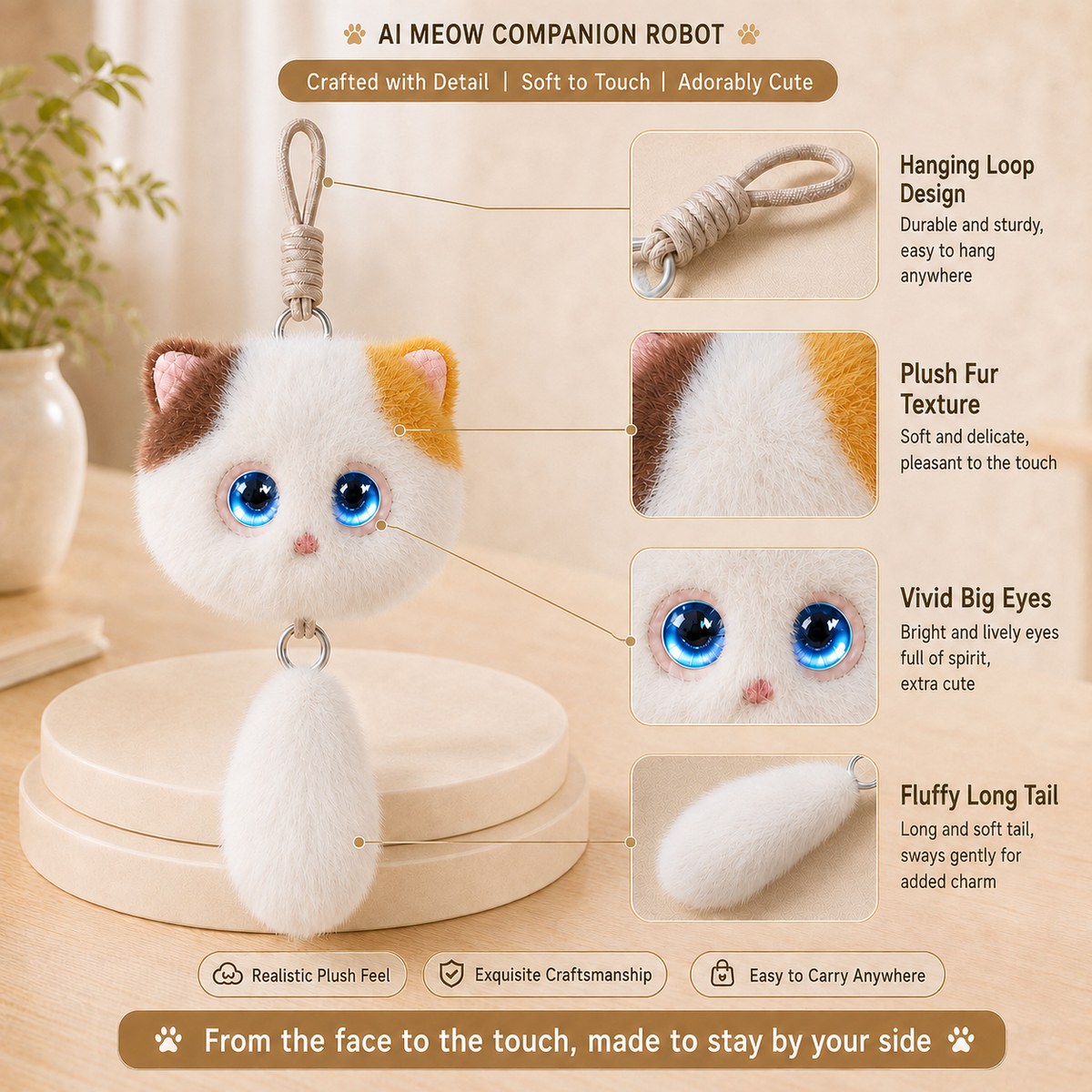
Parents in 2026 are not anti-technology; they are anti-screens. The fastest-growing ask we hear from brand buyers is for screen-free AI plush toys: a companion that talks, remembers and plays, without a display, a feed or an app the child has to stare at. The demand is real, it is measurable, and it is changing what gets briefed to factories.
The evidence is showing up in both product launches and sales data. In September 2026 TalkiPal launched an AI plush line explicitly built around screen-free interaction for children aged 3 and up, with a proprietary conversational AI, a content library of songs, stories and games, and a parent-facing app for routines and growth insights rather than a child-facing screen. On the demand side, Circana reported US toy unit sales up 5% to start 2026, with social-driven discovery pulling shoppers toward sensory, squeezable, screen-free play formats. The screen-free pitch is no longer a niche claim; it is becoming a category expectation.
Why screen-free AI plush toys are winning parent budgets
The pitch lands because it resolves a genuine parental conflict. Parents want interactivity for their children — the responsiveness, the stories, the sense of a companion — but they do not want another glowing rectangle competing for attention. A voice-first plush gives them both sides of that trade: it holds a conversation, recalls the child’s name and favorite stories, and adapts content to the child’s stage, all while the child’s eyes stay on the room instead of a screen. TalkiPal’s positioning makes this explicit, describing its plush not as a toy but as an AI-driven growth companion that connects through screen-free interaction.
For buyers, this matters because the purchase decision is made by the parent, not the child. Screen time guilt is one of the strongest emotional levers in the children’s category, and a product that credibly removes the screen while keeping the interactivity shortens the path from interest to checkout. Retailers have noticed: the screen-free claim now shows up in buying briefs alongside age grading and price band, which means factories need to be able to substantiate it.
The marketing language that works for screen-free AI plush toys
Brands that sell this well do not lead with the technology. They lead with the parenting outcome, and they are specific about what “screen-free” actually means for their product:
- Interaction without a display. State plainly that the toy has no screen and needs none — the conversation happens by voice, and any parent controls live in a separate adult app, as TalkiPal does, not on the toy itself.
- Growth language, not gadget language. Parents buy developmental outcomes: emotional connection, imagination, early learning. “Remembers your child’s favorite stories” outperforms “large language model inside” on every retail page we have seen.
- The bedtime and routine angle. Screen-free companions slot naturally into wind-down routines — stories, lullabies, habit tracking — where screens are actively unwelcome. Ji Chen’s new Happy Pets AI plush series leans on exactly this, listing bedtime storytelling and daily habit tracking among its core features.
- Honesty about connectivity. Screen-free does not mean offline. Say what the Wi-Fi is for (voice processing, content updates), what data is collected, and how parents control it. This is where documented safety compliance and the children’s privacy regulations buyers already watch become a selling point rather than a compliance cost.
What OEMs must design for when the brief says “screen-free”
From the factory side, a screen-free brief changes the engineering priorities. The voice pipeline has to carry the entire experience: wake-word reliability, interruption handling, and latency all matter more when there is no display to fall back on. Content guardrails matter more too, because the child interacts purely by conversation — that means tested voice wake and interruption behavior in every unit.
Physical design follows the same logic. Without a screen, the plush body is the interface: touch sensors, haptic feedback and soft-light cues replace buttons and menus. Power design has to assume long, unsupervised play sessions, which is why buyers increasingly ask about battery behavior and charging safety in the same conversation as the screen-free claim. And the parent app — the one screen allowed in the story — needs to be genuinely useful (routines, insights, content control) rather than a setup chore.
Positioning against the tablet, honestly
The strongest screen-free positioning does not attack screens; it reframes the comparison. A tablet is a general-purpose device the parent has to police; a screen-free AI plush is a single-purpose companion with bounded content. That framing lets brands price on value — developmental, emotional — instead of competing with commodity tablets on specs. It also opens channels that tablets cannot enter easily: therapist-recommended play, school-adjacent learning, and gift buyers who specifically want “less screen time” as the gift message.
If you are briefing a factory on a screen-free AI plush for 2026, tell us your target market, your expected order volume, and which of these angles — routines, learning, gifting, or therapy-adjacent — your brand will lead with. We will come back with the voice pipeline, content setup and certification path that fit that positioning, built in our 15,000 m² facility with 10 years of plush manufacturing experience behind it.

