

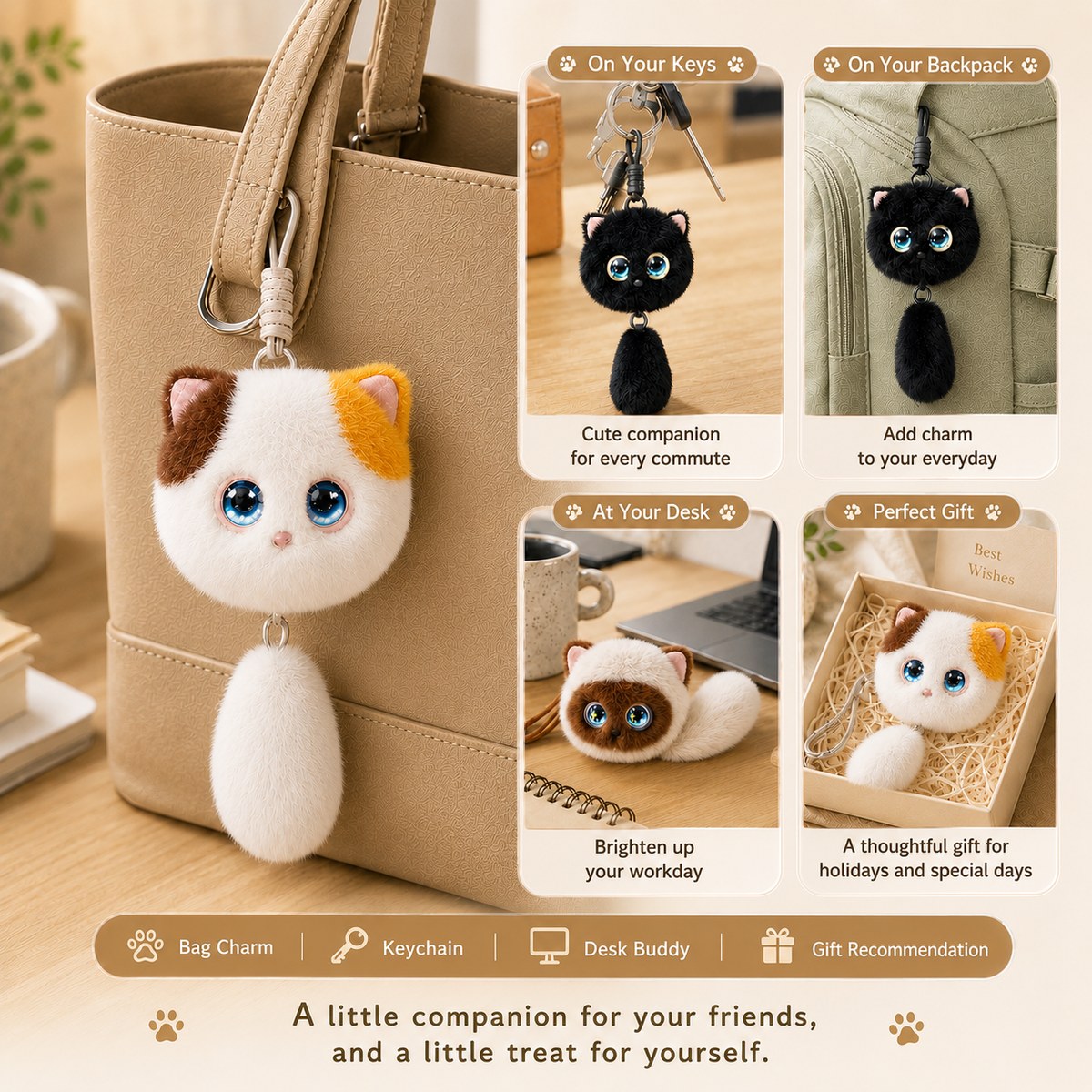
Character-led AI plush pets stopped being a concept and became a sales result on 31 October 2026, when Fuzozo made its debut for English-speaking audiences worldwide. The announcement, issued by its maker RoboPoet through GlobeNewswire, put the numbers plainly: a manufacturer-suggested retail price of US$199, five distinct starting personalities, and over 300,000 units already sold worldwide before the English-language launch. For an OEM or ODM buyer, the lesson is not that one product sold well. It is that buyers are now being asked to choose a character before they choose a toy, and the factory that builds the toy has to be able to build the character too, in voice, memory, and behaviour, not only in fabric and stitching.
Fuzozo is described in the launch release as a take-anywhere plush AI pet that talks, remembers, and develops a personality of its own, sold exclusively through its own website at launch. The five starting personalities are named and characterised in the release itself: TAMI, quiet and thoughtful; WUWA, gentle and sincere; POLU, playful and imaginative; FIFI, cheerful and energetic; and MUKU, calm and observant. The product also carries an iF Design Award 2026 and has appeared at MWC Barcelona 2025 and CES 2026. It shows what the launch market now rewards: a recognisable character, a portable form, and a growth story a buyer can explain in one sentence. An OEM program that treats personality as a software detail added after tooling will struggle to match that pitch, because the character is the product in this category.
Character-Led AI Plush Pets: What Character-Led Means for OEMs
Character-led means the personality is specified before the hardware is frozen. A starting personality is not a single voice. It is a bundle of decisions: the voice and its speaking pace, the vocabulary and sentence length, the kinds of questions the companion asks unprompted, the stories it tells, the way it reacts when it does not understand, and the memories it is allowed to keep. Each of those decisions has a manufacturing consequence. A calm, quiet character that speaks slowly needs different speaker tuning and different volume behaviour from an energetic character that interrupts and jokes. A character that remembers past conversations needs the memory and privacy controls described in our guide to long-term memory in AI companion devices, including what is retained, for how long, and how a parent deletes it. A character that grows over time needs the drift controls in our notes on personality growth and drift in AI plush toys, so the companion a child meets in six months is still recognisably the character that was bought.
The portable, take-anywhere form adds a second set of OEM decisions. A companion that travels is handled more, dropped more, charged in more places, and heard in noisier rooms than a companion that lives on a bed. That changes the durability, battery, and audio requirements in ways a desk sample will not reveal. The toy must survive being carried by a strap or a clip, squeezed in a bag, and picked up by a part that was not designed as a handle. Its microphone must cope with street and classroom noise, its speaker must be intelligible without being loud enough to disturb a room, and its charging port must be reachable and protected without tools a child should not have. These are ordinary engineering questions, but they must be answered for the portable use case, not for a static display sample. A product that works on a trade-show table and fails on a school bus has not passed its real test.
- Persona specification. The named starting personalities, their voice, tone, vocabulary, and the behaviours each one must never show, written as testable claims before sampling.
- Memory boundaries. What the companion remembers, what it forgets, how long transcripts are kept, and the parent-usable deletion and reset controls.
- Portable durability. Drop, squeeze, strap, and pocket testing for the carried form, plus speaker and microphone performance in noisy, real rooms.
- Power on the move. Battery life under conversation load, charging safety, and a charging routine a child can follow without help.
- Channel honesty. Whether the launch is direct-to-consumer, retail, or both, and what the OEM program must deliver for each channel’s returns, support, and content updates.
From a Launch to a Repeatable OEM Program
A launch is a single product. An OEM program is the ability to repeat the launch for another brand, another character, and another market without starting from zero. The repeatable part is not the plush shape. It is the pipeline: a persona definition a brand can approve, a voice and language pack that can be swapped per market, a memory and safety configuration that can be locked per age band, and a hardware platform whose sensor, audio, and battery behaviour is already characterised. Our guide to multi-role and language switching in AI toys shows why the swap must be a configuration change, not a redesign, and our notes on custom voice personas in AI plush toys set out how a brand character or a recorded voice is implemented without crossing consent boundaries. A buyer should ask a supplier to demonstrate the same hardware running two different characters, in two languages, with different memory settings, on the same day. If that demonstration needs a new build, the platform is not yet a program.
Fuzozo’s direct launch also carries a channel warning for OEM buyers. An exclusive website launch lets a brand control the story, the price, and the first wave of reviews, and it keeps the support conversation close to the maker. A retail launch does the opposite: it puts the product in front of buyers who will test it against neighbours on a shelf, ask for compliance files, and expect a returns process that works without the maker’s help. Neither channel is wrong. The mistake is building a product for one channel and selling it through the other without changing the packaging, the documentation, or the after-sales plan. Decide the channel before the order, and let the channel decide how much of the program must be finished before the first shipment.
The commercial point is simple. Character-led products raise the bar for everyone in the supply chain, because the buyer is no longer comparing plush toys. The buyer is comparing companions, and a companion is judged on the second week, not the first unboxing. Build the persona, the memory limits, and the portable durability into the specification, test them on samples that have been carried and talked to for weeks, and write the drift and reset behaviour into the order. A factory that can do that can build more than one hit. A factory that can only build a shape will be chasing the next launch instead of supplying it.
At Aslan Technology, we manufacture AI companion plush in a 15,000 m² facility with 10 years of OEM experience, an annual capacity of 250,000 units, and 70,000 units exported every year. Tell us your target market and expected order volume, and we will map the design, compliance, and pricing options to your program.

