

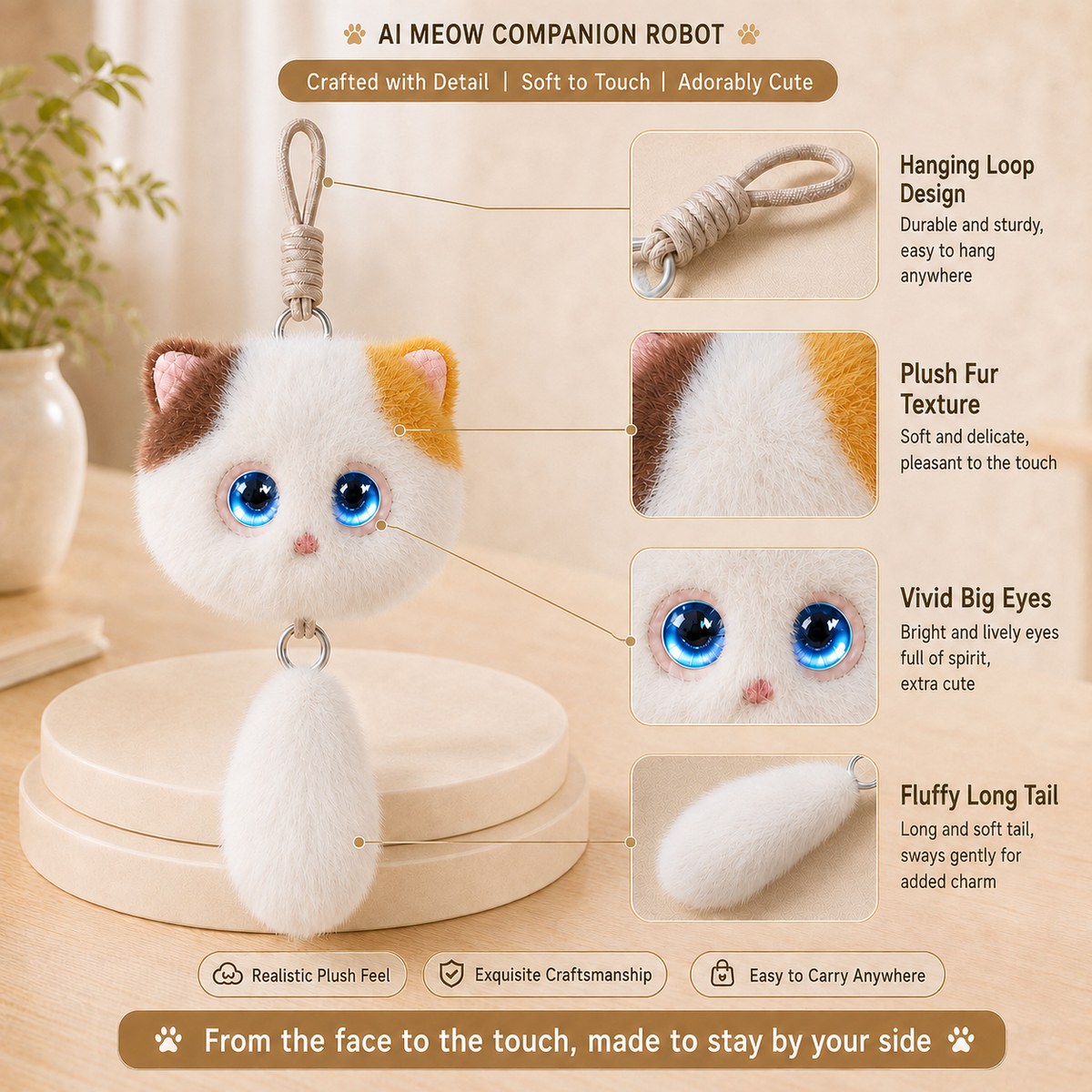
The memory chip shortage AI plush buyers are feeling in 2026 did not start in a toy factory. It started in data centres. The three largest memory makers have redirected wafer capacity and investment toward high-bandwidth memory, or HBM, for AI accelerators, at the expense of some conventional DRAM and NAND supply, according to the Information Technology and Innovation Foundation. IDC describes the result as a supply and demand imbalance in which demand from AI data centres continues to outstrip supply, with effects that could persist well into 2027. A plush toy uses far less memory than a server or a flagship phone, but it buys from the same pool: the DRAM, flash, and storage modules inside an electronic toy are made on the same constrained capacity, sold by the same suppliers, and priced in the same market. When that market tightens, a toy program feels it as a higher quote, a longer lead time, or a module that is suddenly unavailable in the specified part.
The price movement in 2026 has been large enough that it cannot be absorbed as rounding. TrendForce figures reported in October 2026 put conventional DRAM contract prices up roughly 90 to 95 percent in the first quarter of 2026, with NAND flash up 55 to 60 percent over the same stretch, and suppliers warning customers to brace for further monthly increases heading into year-end. A separate TrendForce estimate, reported by DatacenterDisk, puts HBM at about 18 percent of the top three suppliers’ DRAM wafer input at the end of 2025, rising to a forecast 22 percent by the end of 2026 and 30 percent by the end of 2027. IDC expects 2026 DRAM and NAND supply growth below historical norms, at 16 percent and 17 percent year on year respectively. None of those figures is a toy price. They are the background against which a toy quote is written, and a buyer who does not know them will read a price increase as a factory margin decision when it is, at least in part, a market decision.
Memory Chip Shortage AI Plush: Why a Small Toy Feels a Big Shortage
Memory is a small share of a plush toy’s bill of materials compared with the textile, the electronic core, testing, and freight, but a shortage does not need a large share to cause a large disruption. If one specified memory part is unavailable, the whole unit cannot ship, whatever the cost of the rest of the toy. Suppliers prioritise the orders that are largest, longest, and most predictable, and a toy program ordering in the tens of thousands is small beside a hyperscaler order. That is why availability, not only price, is the first risk to manage. A second source qualified before it is needed is worth more than a second source found during a shortage, when every buyer is asking the same suppliers at the same time. Our guide to dual-sourcing AI modules sets out the same logic for the module as a whole, and memory should be treated the same way: two qualified options, tested in the same hardware, before the shortage becomes the reason to look.
The shortage also changes what good design looks like. A toy that stores large voice packs or long stories on the device needs more flash than a toy that streams its content or keeps its on-device library lean. Over-specifying memory in a shortage is not prudence; it is buying the scarcest part in the largest size. The design question is practical: what is the smallest memory configuration that delivers the promised experience, with a margin for updates, and what is the fallback if that part is unavailable?
Locking Pricing Without Locking in a Problem
Price validity is the first clause to renegotiate. A quote that was valid for thirty days in a stable market may be valid for a week, or for a named quantity only, when memory prices move monthly. Buyers should ask, in writing, how long the memory portion of the quote is held, what triggers a re-quote, and whether a price increase is capped or passed through in full. Agree the trigger, the evidence, and the notice period before the order, and agree what happens if the buyer does not accept the new price.
Volume and timing are the buyer’s leverage, and both should be used honestly. A larger, firmer order with a longer horizon is easier for a supplier to cover than the same quantity split into small, uncertain releases, because the supplier can buy the memory against a known requirement. It means giving the supplier a forecast the buyer will stand behind, in writing, for the memory-bearing parts, and placing the firm order early enough for the supplier to secure allocation. Our teardown of where AI plush costs really hide shows why a single component can move the whole quote, and memory in 2026 is the clearest example of that effect.
Designing for Leaner Storage
- Qualify two memory parts. The same footprint and interface, tested in the same hardware and firmware, so a shortage in one part is a substitution, not a redesign.
- Specify the minimum that works. Size the on-device library, voice packs, and model for the experience promised, with a stated margin for updates, and record the fallback size that still ships.
- Separate content from hardware. Where the product model allows it, keep heavy content in the cloud or in downloadable packs, so the on-device memory does not have to carry every story the toy will ever tell.
- Freeze the memory specification early. Late changes to memory size or supplier, after tooling and firmware are set, are the changes a shortage punishes most.
- Agree a substitution rule. Which substitutions the factory may make without fresh approval, which need the buyer’s written agreement, and what re-testing each substitution requires.
- Hold a buffer where it counts. A small buffer of the memory-bearing module, held against a firm forecast, protects the production slot better than a large buffer of finished toys held against a guess.
The shortage is expected by IDC to persist well into 2027, and TrendForce’s HBM forecasts run to the end of 2027, so buyers should plan as if tight memory supply is the background for at least the next two buying cycles. Ask the factory for the memory part numbers, the second source, and the price-validity terms before agreeing the retail price, because the retail price agreed without them is a guess about a market that is moving every month.
At Aslan Technology, we manufacture AI companion plush in a 15,000 m² facility with 10 years of OEM experience, an annual capacity of 250,000 units, and 70,000 units exported every year. Tell us your target market and expected order volume, and we will map the design, compliance, and pricing options to your program.

