

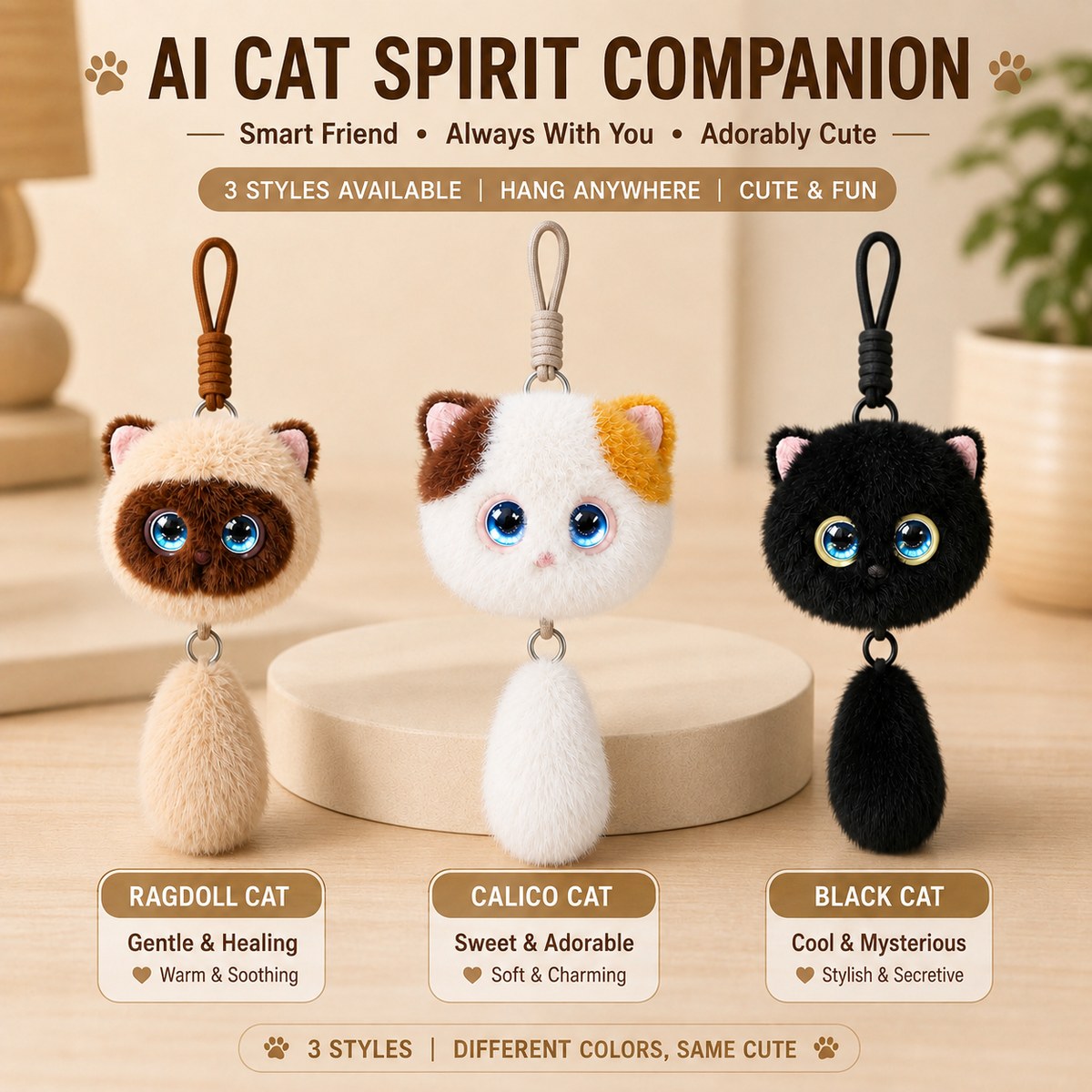
Privacy-first AI plush toys just got their flagship proof point. On October 15, 2026, UDEXREAL — a Hong Kong developer of stretchable sensor technology, previously known for the UDCAP hand-tracking gloves used in robotics, simulation and VR — launched NiniQuu, a palm-sized plush companion, on Kickstarter. Its headline feature is a list of absences: no camera, no microphone, no Wi-Fi, no Bluetooth, no cloud. Squeeze it, stroke it, tap it or carry it, and it answers with a change of expression, a sound, or a small vibration — driven entirely by the stretchable sensors UDEXREAL built its name on.
Why the privacy-first AI plush design lands now
UDEXREAL is reading a real shift: more consumers are choosing devices that cannot phone home, from dumb phones to film cameras. NiniQuu sits at the far end of the AI companion conversation from devices like Meta’s Muse Charm, unveiled at Meta Connect 2026 — the company says most companion technology demands attention with streaks to maintain, nudges to answer, and notifications to clear, while NiniQuu asks for none of that. No wake word, no face to recognize, no relationship to keep up: closer to a fidget object than a pet.
The timing is not accidental. Parent-facing trust in talking toys has been shaken by real incidents — a teddy bear that discussed inappropriate topics with children triggered warnings from AI watchdogs — and the compliance bar keeps rising. In the United States, children’s voice data sits under COPPA, a patchwork of new state privacy laws, and mandatory CPSC eFiling of certificate data at entry; in the EU, the AI Act and toy-safety rules add their own layers. A toy that never records anything has none of these liabilities. For buyers, “it physically cannot spy” is the simplest compliance story in the category — and deletion workflows, which we covered in kids’ voice-data erasure, simply do not apply.
Who actually buys no-mic plush — and why it is not just parents
The instinct is to frame this as a kids’-privacy story, but the buying base is wider. Privacy-sensitive parents are the headline segment, yet the same no-recording proposition sells to schools and kindergartens with strict data-handling policies, elder-care and therapy settings where voice recording is a regulatory or ethical headache, and corporate gifting buyers who want a tech-forward item without triggering their own IT security review. NiniQuu’s positioning as an everyday-carry bag charm also opens the adult collector and “kidult” shelf — see our notes on designing AI plush for adult collectors — where the privacy pitch doubles as a lifestyle statement rather than a compliance checkbox.
What OEMs should take from NiniQuu’s no-mic bet
Do not read NiniQuu as a verdict that voice AI is dead in plush — read it as the opening of a product tier. Smart OEMs can now offer clients a three-level lineup:
- Sensor-only privacy tier — touch, stretch, and motion sensors with expressive output. No radio modules, no microphones, no cloud: the bill of materials shrinks, FCC and CE-RED radio certifications disappear, firmware is simpler, and the privacy pitch writes itself.
- Voice tier — full conversational AI with microphones and connectivity, for buyers chasing the flagship experience.
- Hybrid tier — sensor-first interaction with an optional connected mode parents explicitly enable.
The engineering lesson is worth underlining: UDEXREAL’s differentiator is not a better LLM, it is better sensing. Stretchable, high-density touch sensors turn a hug into believable interaction without a single spoken word. That suggests the next OEM battleground is not who has the most languages, but who has the most convincing physical responsiveness — a contest traditional plush manufacturers are well placed to enter.
Design details worth borrowing
Even brands committed to voice AI can borrow from the playbook. Palm-sized, bag-clip form factors cut shipping weight and retail shelf space versus 30cm plush — a meaningful landed-cost advantage now that per-parcel duties are permanent. Expression-based feedback (eyes, light, vibration) costs less per unit than a good microphone-and-speaker stack and works in noisy environments where voice input fails. And UDEXREAL’s own background — stretchable sensors honed for hand-tracking gloves — is a reminder that the moat sits in sensor IP, not in whichever LLM the toy phones home to. For OEMs, that means tactile expressiveness is a legitimate line item in the next design brief, not a nice-to-have.
The honest limits of the privacy pitch
Buyers should size expectations correctly. A sensor-only toy cannot answer questions, tell evolving stories, or do the bedtime-companion routines that sell voice AI plush — its emotional range lives in expressions, sounds, and vibration patterns. Pricing and positioning must reflect a tactile comfort object with smart feedback, not a chat partner. For adult collectors, desk companions, and gifting channels, that is plenty; for parents buying an “AI tutor,” it is not.
At Aslan Technology, our 15,000 m² facility produces up to 250,000 AI companion toys per year and ships 70,000 units abroad annually, with 10 years of OEM/ODM experience behind every export program. We can develop both tiers for your line — fully connected voice AI plush or sensor-first privacy designs — on the same production lines. If the privacy-first segment fits your roadmap, tell us your target market and expected purchase volume, and we will scope a prototype program.

