

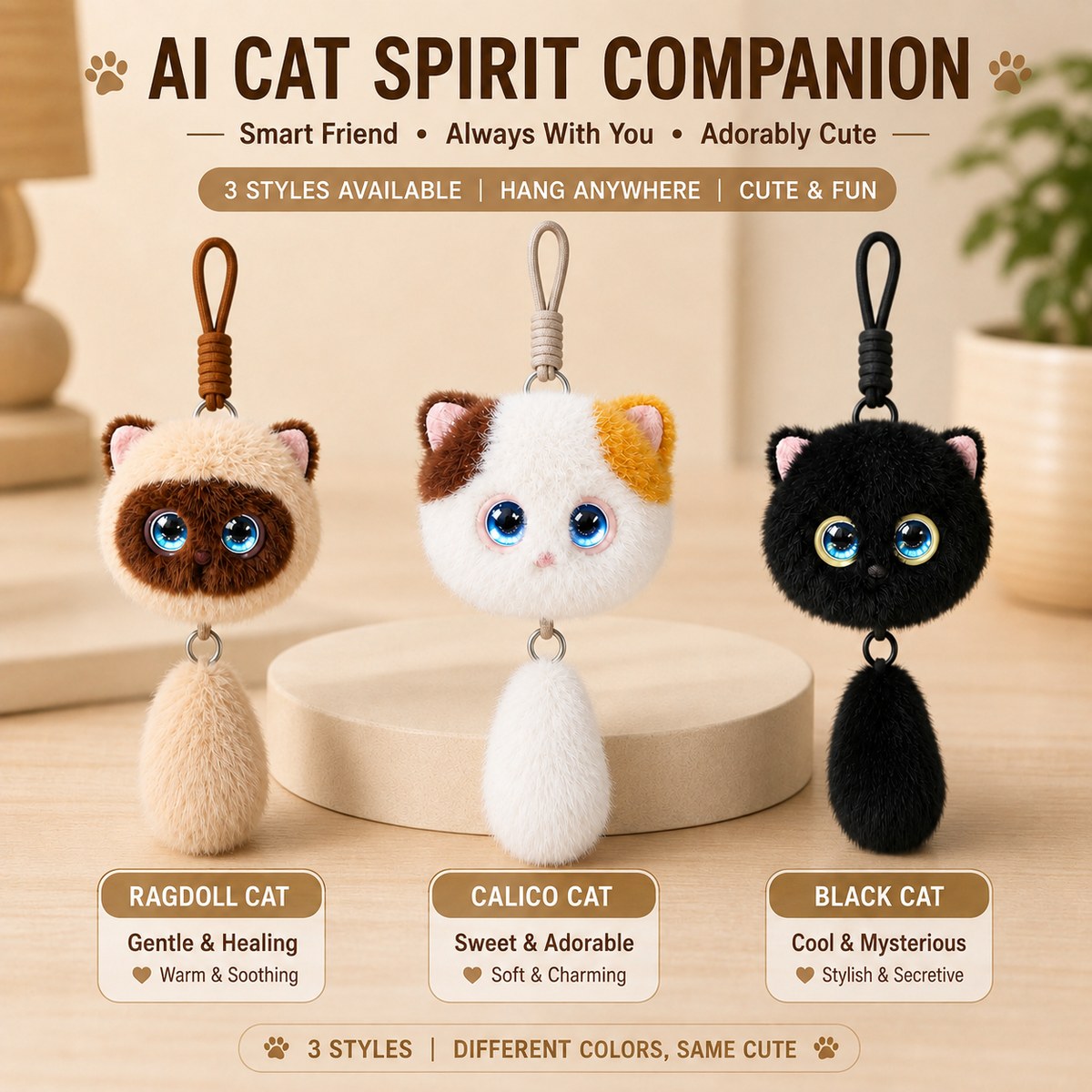
Retailers have discovered the AI plush opportunity and want it under their own label. The question is which manufacturing model gets them there fastest: white label AI plush, where a proven product ships under the retailer’s brand, or a full OEM program built to their specification. The distinction matters more for AI toys than for ordinary plush, because the “product” includes a cloud platform, voice pipelines, and content libraries — assets a retailer cannot simply rubber-stamp. This article maps how white-label programs differ from OEM, where the speed advantages end, and which commercial terms actually work.
Terminology first. A white-label product is produced by one company and sold by retailers under their own trademark — the same product can be rebranded by multiple marketers, with customization typically limited to logos, colors, and packaging. Private label sits nearby but usually involves deeper specification work for a single brand. OEM is different again: the manufacturer produces to the client’s detailed specifications, often with new engineering, tooling, and design work, while the client keeps full ownership of the resulting IP. In toy sourcing practice, the boundary between these models varies by supplier — so when a factory offers “white label AI plush,” confirm exactly what is standard, what is changeable, and what stays the manufacturer’s property.
White Label AI Plush: Speed With Boundaries
For retailers, white label is the fastest route to shelf. A market-ready AI plush — hardware validated, safety certifications in place, voice platform live, content libraries populated — can be rebranded in weeks rather than months. The trade-off is that the core stays the manufacturer’s: the same underlying product may appear under other brands, the conversational AI’s personality and content roadmap are controlled centrally, and deep changes (a different character, a proprietary voice model, a unique hardware form factor) fall outside the white-label frame. For AI plush specifically, retailers should ask three questions that do not exist for ordinary private-label goods: who controls the voice platform the toys connect to, how is the retailer’s customer data separated from other white-label clients, and what happens to the retailer’s brand if the manufacturer discontinues the platform?
OEM: Slower, Exclusive, Yours
OEM is the model for retailers and brands that want differentiation to own the product story. The manufacturer builds to detailed specifications: custom character design, proprietary voice persona, tailored content libraries, and packaging designed around the retailer’s brand guidelines. Development timelines are longer — new tooling, new certification testing, and content localization all take time — and upfront costs run higher. But the retailer ends up with exclusivity, IP ownership, and a product no competitor can source off the same shelf. For AI plush, OEM also means control over the AI layer: which model powers the conversation, what the safety filters allow, and who owns the conversation data. Our OEM vs ODM breakdown covers how these models differ structurally for AI toys.
Commercial Terms That Work in Practice
White-label programs that survive contact with real retail operations share a few commercial features. First, transparent tiered pricing with volume breaks that let the retailer forecast margins — see our wholesale pricing tiers guide for how AI plush programs are typically structured. Second, clear platform terms: uptime commitments for the voice service, data separation guarantees, and a continuity clause if the platform is retired. Third, certification ownership: the retailer needs test reports and certificates in a form their compliance team can file, not a promise that “the factory has CE.” Fourth, a defined customization menu — logo placement, colorways, packaging, voice language — so negotiations stay inside what the production line can actually deliver. Finally, sensible MOQs: white label works because tooling is already paid for, so minimums should reflect that, not OEM economics.
Choosing Between White Label and OEM
- Choose white label when speed matters more than exclusivity — seasonal campaigns, testing the category before committing, or expanding an existing own-brand range with a proven AI plush.
- Choose OEM when the brand is the asset — a retailer whose identity would be diluted by a product also sold under other labels, or a brand with IP (characters, voices, content) that must remain proprietary.
- Consider the AI layer explicitly. Ordinary white-label goods have no cloud dependency; AI plush does. Whatever model you choose, the contract must name who operates the platform, who owns the data, and what the exit path looks like.
- Start white label, graduate to OEM. Many successful retail AI plush programs begin with a white-label pilot to validate demand, then reinvest the margin into a custom OEM line once volumes justify tooling.
White label is also worth comparing against adjacent channel models: a subscription box partner, for instance, may prefer white label for the same reason — proven product, their brand, fast launch.
Aslan Technology runs both models from a 15,000 m² facility with 10 years of experience, 250,000 units of annual capacity and 70,000 units exported each year. Our white-label AI plush program ships proven designs with certification packages, platform continuity terms, and a defined customization menu; our OEM program builds from your specification with full IP assignment. Tell us your target market and expected volumes, and we will recommend the model — and the commercial terms — that fit your launch timeline.

