

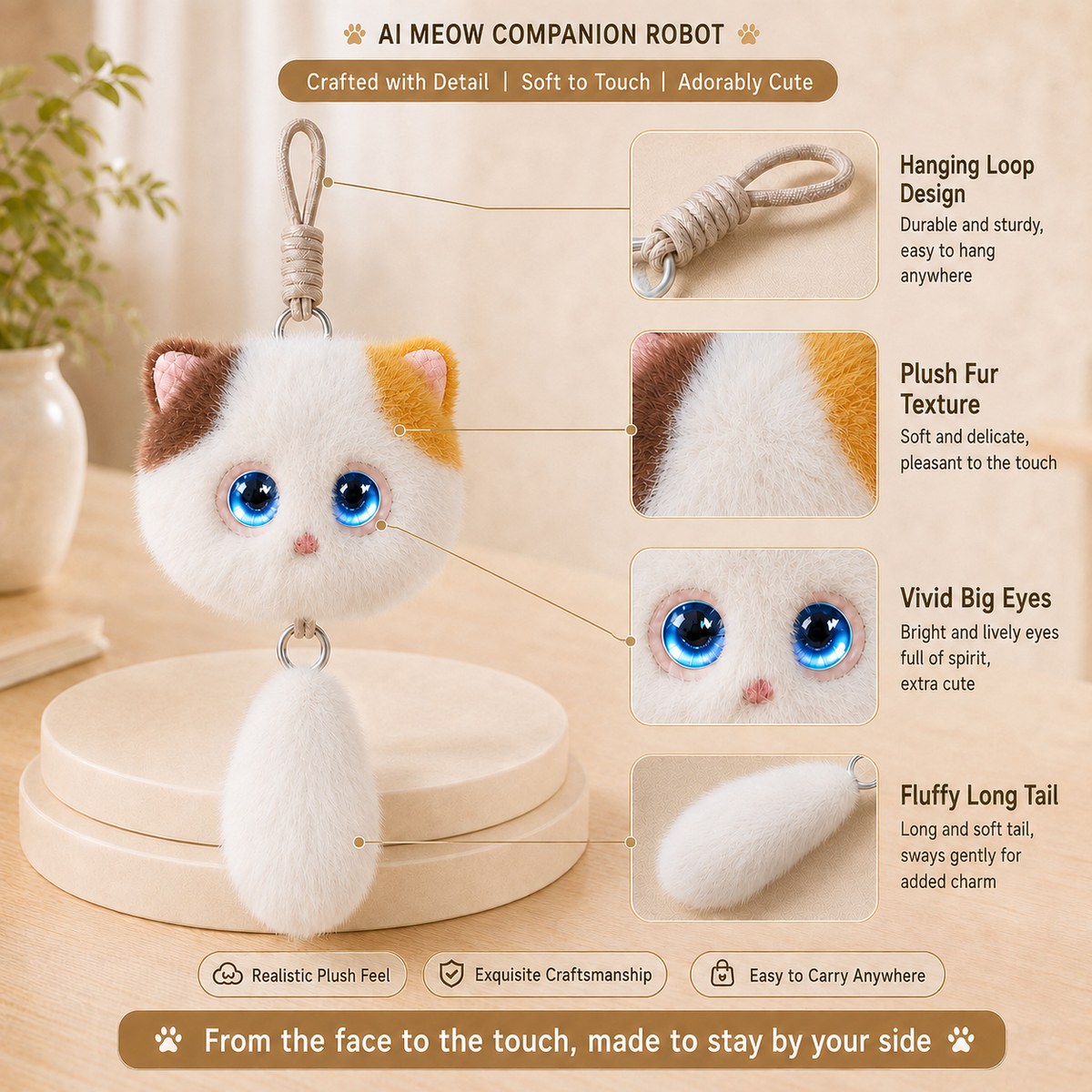
Why sampling is a buying decision, not a formality
Before you commit to a bulk run of an AI plush toy, you are really deciding whether the unit you just paid to make matches the product you intend to sell. That is why AI plush toy sampling is where most projects are won or lost. A sample is the physical golden standard for the fabric, the electronics, the voice pipeline and the packaging. Get the sample wrong and every unit in the bulk order repeats the mistake at scale. Get it right and the rest of the order is a controlled, repeatable process.
Because an AI plush is a soft toy with a battery, a speaker, a microphone and a Wi-Fi module inside, a sample is more than a sewn prototype. You are validating the electronics and the user experience at the same time, and that is exactly what makes a custom AI plush sample round different from sampling an ordinary stuffed animal.
What a sample round actually costs
There is no single published price, because cost scales with size, design complexity, materials and how many revisions you need. But buyers should expect a sample fee per design, plus the time it takes, and it is worth understanding which parts are refundable.
- Sample / prototype fee. A per-design charge that covers pattern making, a physical prototype and usually one or two revision rounds. For plush work this is commonly in the range of roughly $100 to $300 per design depending on complexity. An AI plush with its electronics and voice setup typically sits toward the higher end of that band.
- Revision rounds. Each cycle of changes adds time, and each round is usually 5 to 10 working days. The sample fee and the number of revisions included in it are the two things to pin down before you start.
- Which fees get credited. Many manufacturers credit the sample fee against the bulk order once you confirm production, often above a minimum quantity threshold. Confirm this in writing, because it is the part of sampling that frequently comes back to the buyer.
For an AI plush, the electronic and connectivity parts of the sample are the ones most likely to need a second look, so budget for the possibility of an extra revision round rather than assuming one is enough. Sending grouped, clearly annotated feedback between rounds cuts the number of cycles and keeps the timeline tight.
How long a sample round takes
The realistic range for a first physical prototype of a fully custom plush is roughly 7 to 15 working days from the point the factory has your complete design files. An AI plush with a working voice and connectivity stack will be at the slower end of that, because the electronics have to be integrated and tested, not just sewn.
From the first prototype to a final pre-production sample, most projects run two to four weeks, and longer when the design is complex or the revisions are heavy. The two things that move this most are how clean your initial files are and how fast approvals come back on your side. A complete brief with views, color references and a spec for the electronics gets you through faster than a rough sketch that needs interpretation.
What to verify on the sample before you approve it
Approving a sample is a quality decision, so check it the way you would check the finished unit, not just the shape. For an AI plush that means the full functional chain:
- Power and charging. It wakes on the correct input and charges without issue.
- Connection. It pairs over 2.4G Wi-Fi or a hotspot, no app required.
- Voice. It listens, responds, and lets you interrupt mid-answer. This is the core experience, so test it, not just the wake word.
- Construction. Seams, filling, fastenings and any small parts hold up; nothing detachable is loose.
- Labels and packaging. Markings, warnings, age grading and the packing are present and correct.
The sample is the golden standard, so treat it as the baseline the whole bulk order will be judged against. If you approve a sample with a known compromise, you have told the factory that compromise is acceptable for thousands of units. Pair this stage with the broader checklist we put together for sourcing an AI plush from China so the sample checks line up with what you will inspect at the end of the run.
Planning your AI plush toy sampling around the target market
Two inputs shape every sampling decision: your target market, because it sets which safety and compliance checks the sample has to pass, and your quantity, because it sets how much of the sample fee is likely to be credited and how the bulk terms work. If you are new to the category, it also helps to look at what a first order typically looks like in terms of minimum quantities before you lock in the sample scope.
Send us your target market and your expected quantity and we will come back with the sample fee, the number of revision rounds included, how long the round will run, and which compliance checks the sample needs to clear for your market. That gets you a realistic sampling plan instead of a guess.

