

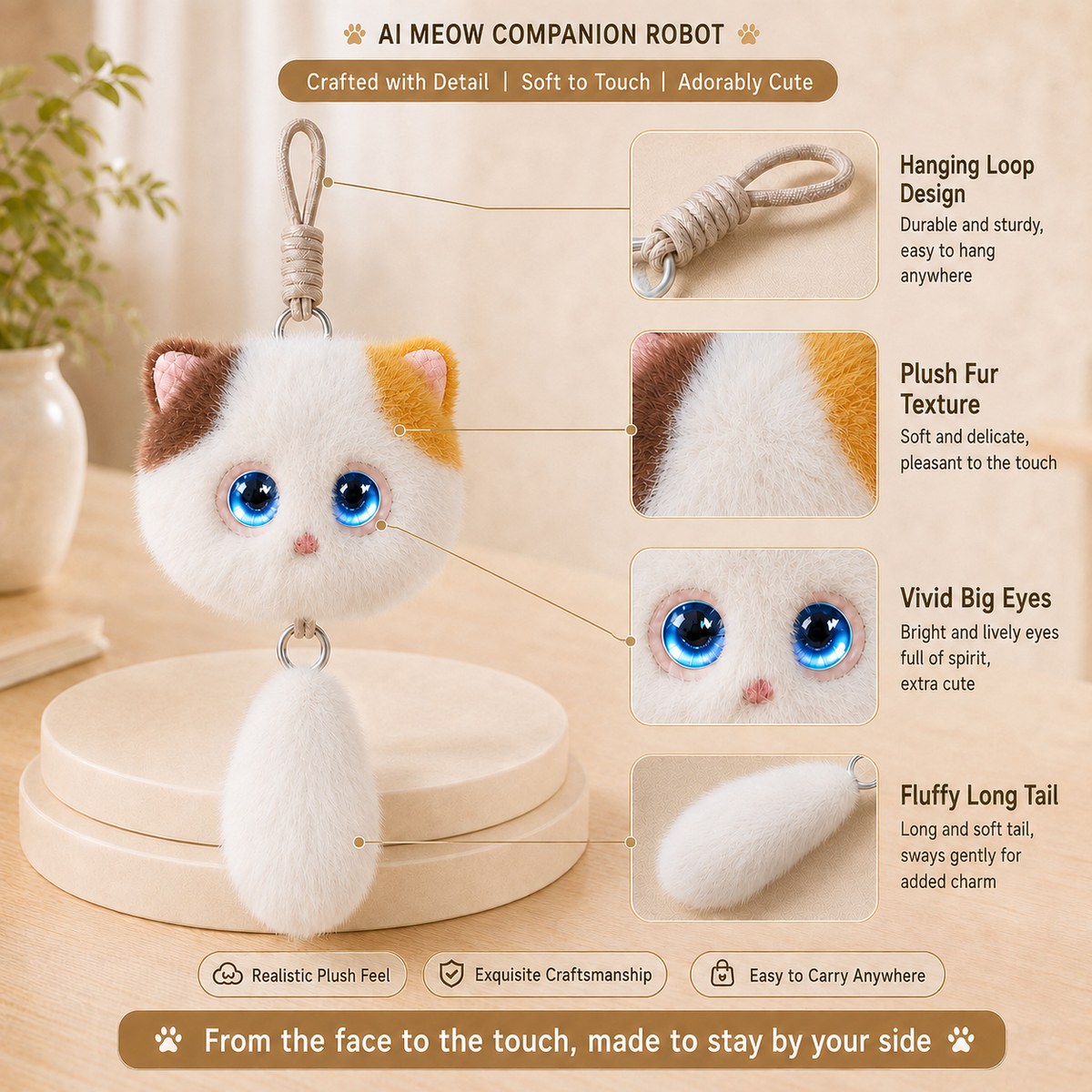
The difference between an OEM order and a brand is often a label, a tag, and a box. For retailers and IP holders, private label AI plush toys are how a factory’s electronics platform becomes their own product line. Getting branding right means understanding every layer where a brand mark can appear — and knowing which layers cost almost nothing and which ones move the unit economics.
The Branding Layers on Private Label AI Plush Toys
Branding on an AI plush toy happens at five levels, and they are decided at different stages of the order. Mapping them early avoids the most common private-label mistake: approving the product design while the packaging and labels are still an afterthought.
- Woven and printed labels: Sewn into a seam, carrying the brand name, care instructions, and regulatory marks. Woven labels give a premium feel; printed labels are cheaper and faster to change between order batches.
- Embroidered or printed logos: The brand mark can be embroidered directly onto the plush body, foot, or back, or printed for fine detail. Embroidery reads as higher quality; printing handles complex artwork better.
- Sewn patches and hang tags: Embroidered patches add a tactile brand element, while hang tags carry the retail story — features, QR code to a setup video, and compliance information.
- Retail packaging: From a simple OPP bag with a header card to a full printed color box or window box. Private label buyers targeting retail shelves almost always need custom packaging, and it should be designed alongside the toy, not after it.
- Digital branding: Unique to AI toys — the voice greeting can speak the brand name, wake words can be customized, and companion-app screens (where used) carry the brand identity. This is where an AI plush toy’s private label can feel genuinely branded rather than merely labeled.
What Private Label Branding Actually Costs
Branding costs split into one-time setup costs and per-unit costs. Setup costs cover artwork preparation, label or embroidery digitizing, packaging design, and any custom voice recording. Per-unit costs are the incremental cost of the branded label, the custom tag, and the upgraded packaging. Buyers should get both broken out in the quotation, because lumping them into the unit price hides what gets amortized and what does not. A useful rule: any branding element the factory must re-setup for each reorder (new tag artwork, new box print plates) should be flagged in the first quote, so reorder pricing has no surprises. Factories with strong OEM programs quote these layers separately as standard practice.
Artwork and Approval Workflow
Private label projects stall most often at artwork. To keep the timeline tight, buyers should deliver vector artwork (AI or PDF) at the sizes the factory specifies, and confirm every branding layer on the pre-production sample — not just the toy’s face and voice, but the labels, tags, and packaging too. The sample stage is also where to check that branding does not compromise compliance: care labels must carry the correct fiber content and origin information, and any digital branding must not interfere with the safety markings the target market requires. Expect the full sampling and approval cycle to include a dedicated branding sign-off step.
Protecting Your Brand in the Factory Relationship
Private label means the brand is yours and the manufacturing is theirs. Buyers should confirm in writing who owns the artwork, the embroidery files, and any custom voice recordings created for the order — and that the factory will not reuse your branding for other clients. Non-disclosure and non-circumvention terms belong in the purchase agreement, not in an email. This is especially important for AI plush toys, where custom voice content and conversation personas are themselves brand assets. Clear IP ownership terms are as much a part of a private label deal as the woven label on the toy.
Branding Decisions That Affect Lead Time
Every branding layer adds time to the schedule, and buyers planning seasonal launches need to account for it. Woven labels and embroidery files are typically digitized within days once artwork is approved; custom printed packaging takes longer, since box printing and die-cutting run on their own production line; custom voice recordings add a studio session plus integration testing. The practical move is to lock branding artwork in the same approval round as the toy sample, so packaging and labels progress in parallel with production rather than queuing behind it. Factories that run private label programs at volume will give you a branding timeline alongside the production timeline — ask for both in writing before you confirm the order.
Aslan’s 15,000 m² facility produces private label AI plush toys at an annual capacity of 250,000 units, with 70,000 units exported each year — the scale at which branding runs stay consistent from the first batch to the fiftieth. With 10 years of OEM manufacturing experience, we handle woven labels, embroidery, hang tags, retail packaging, and custom voice branding as one coordinated workflow. If you are building a private label line, tell us your target market and expected purchase volume, and we will map the branding layers and costs for your project before you commit.

