

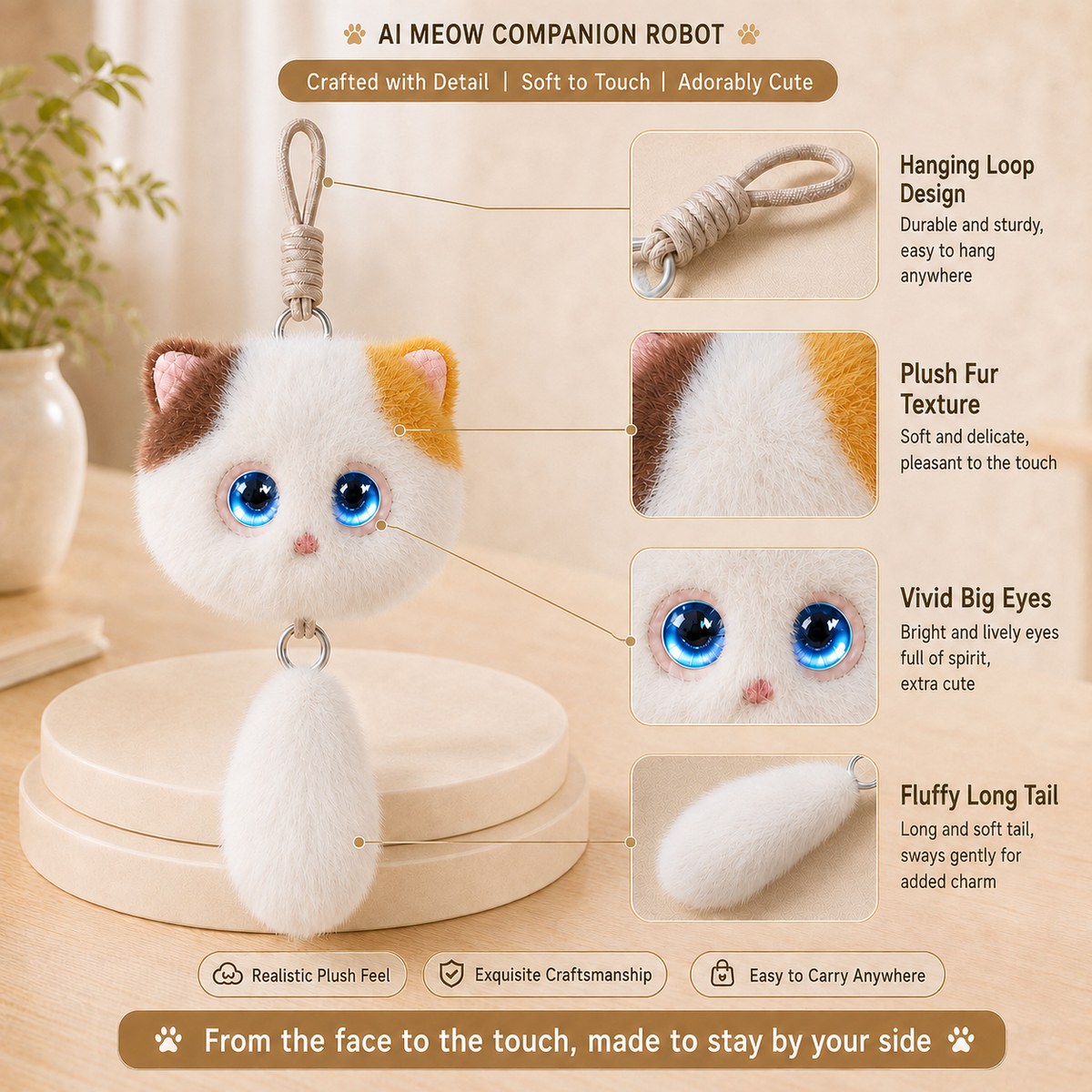
A classic product liability policy is no longer enough when the product talks back. AI toy product liability insurance sits at the intersection of three exposures that a traditional plush toy never created: a physical product that children hold, a cloud-connected software layer that collects voice data, and a conversational AI whose behavior can change with every model update. Brands that treat AI plush like ordinary stuffed toys often discover the gap only when a retailer asks for a certificate of insurance — or when a claim arrives.
Connected toys pull in exposures on top of classic product liability: cyber liability for data handled by companion apps and voice platforms, recall expense when firmware or cloud changes force a market withdrawal, and professional liability for the software design itself. Insurers have responded with connected-product endorsements that extend traditional coverage into software-as-a-product defects and firmware vulnerability exposures, but the market is still writing the rules in real time. For brands sourcing AI plush from OEM partners, insurance is now a supply-chain conversation, not a back-office formality.
Why AI Toy Product Liability Insurance Is a Different Animal
Traditional product liability assumes a fixed product: design it, test it, ship it, and the risk profile stays roughly stable. An AI companion plush breaks that assumption. Its conversational behavior can shift when the underlying model is retrained or its safety filters are tuned, which means the product sold in January may behave differently by June. California’s SB 867, signed into law and effective January 1, 2027, brings exactly this problem into the product safety frame: software behavior is treated as part of a toy’s safety profile, not as a separate digital service. That framing pulls questions about who controlled the design, which risks were foreseeable, and whether a safer design was feasible into familiar product liability territory — and it is precisely the kind of claim profile insurers are still learning to price.
There is also the “silent coverage” problem. When a policy says nothing about AI, coverage depends on how a claim is characterized at the time of loss — as a professional error, a cyber incident, or a product defect — and different policies respond differently to each framing. Verisk’s Insurance Services Office has already made optional generative AI exclusion endorsements available for commercial general liability policies, and standardized policy language of that kind appears in the majority of US property and casualty policies. Brands should assume their current general liability policy may already exclude, or be about to exclude, AI-driven outcomes, and check the fine print rather than hope for the best.
Three Coverage Layers AI Toy Brands Need
Most AI plush programs need at least three layers working together. Cyber liability has become the fastest-growing coverage type in the connected toy insurance market, driven by breach frequency and tightening data protection rules. AI plush toys collect children’s voice recordings, conversation histories, and behavioral data through cloud platforms — the kind of sensitive dataset regulators care about. Cyber policies typically cover first-party costs such as breach investigation, notification, and credit monitoring, plus third-party liabilities from regulatory actions and privacy claims. Brands whose toys pair with companion apps, or whose voice pipelines run through third-party cloud providers, should treat cyber coverage as mandatory rather than optional.
Product recall expense coverage matters more for connected toys than for classic ones, because a recall no longer means a physical defect alone: a flawed firmware push, a compromised cloud endpoint, or a voice-safety failure can force a market withdrawal of tens of thousands of units that were perfectly fine mechanically. As discussed in our analysis of 2026 toy recall cases, recall logistics for smart plush involve data handling, firmware remediation, and customer communication costs that standard policies were not designed for.
Technology errors and omissions (E&O) covers errors in software or services — a different trigger from cyber insurance, which covers unauthorized access to data or systems. Liability arising from errors or inappropriate outputs of a brand’s own AI product generally needs Tech E&O with an AI endorsement; without it, AI-generated errors may be excluded from standard E&O coverage. The Lloyd’s Market Association published a 2026 market survey on AI loss scenarios, scoring exposures across professional indemnity, cyber, accident and health, and product recall lines — a signal that underwriters are actively mapping where AI risk lands. When shopping for coverage, brands should push for explicit language on who covers model behavior, who covers data incidents, and where the handoff sits.
What Retailers Demand to See
Retail buyers gatekeep on insurance long before they talk about shelf space. A major retailer typically wants a certificate of insurance naming them as an additional insured, per-occurrence and aggregate limits that match the retailer’s vendor requirements, product recall coverage with meaningful limits, and confirmation that data-handling activities are covered. Brands that cannot produce a certificate that mentions connected or AI-specific exposures lose shelf negotiations early. For brands working with an OEM factory, retailers also want to understand the chain: who designed the AI layer, who hosts it, who updates it, and who can suspend it in an incident. Documenting that responsibility map — and aligning it with the indemnity clauses in your manufacturing agreement — is exactly what California’s new rules push companies to do, and what a good underwriter will ask about before quoting.
Aligning Insurance With Your OEM Contract
Insurance and manufacturing agreements have to tell the same story. If the factory supplies the hardware and a third-party AI provider supplies the conversational layer, the brand must confirm that representations, regulatory compliance provisions, indemnities, defense obligations, and change-notification requirements in its contracts address AI functionality — and that someone has underwritten each party’s slice of the risk. Your privacy notice is part of the same package: the promises made to parents about data collection and retention become the standard against which a cyber claim is measured. And warranty terms, which we covered in our warranty risk guide, should dovetail with insurance so that “who pays when the software fails” has one answer, not three.
Practical steps for brands planning an AI plush program:
- Map every AI component in the product — conversational model, voice pipeline, memory features, safety filters — and document who selects, configures, hosts, monitors, and updates each one.
- Ask your broker to confirm, in writing, whether your current general liability, E&O, and cyber policies respond to claims based on software behavior — and whether any generative AI exclusions have been endorsed onto your program.
- Build recall expense limits around the real cost of a connected recall: reverse logistics, firmware remediation, cloud costs, customer notification, and regulatory reporting — not just freight.
- Require your manufacturing partner to maintain their own product liability and cyber coverage, name your company appropriately, and provide certificates before each production run.
Aslan Technology operates a 15,000 m² facility with 10 years of manufacturing experience, annual capacity of 250,000 units and annual exports of 70,000 units. We build compliance documentation, test reports, and certification packages into every OEM and ODM program, so the paperwork your insurer and your retail buyers ask for is ready before it is requested. If you are planning an AI companion plush line, tell us your target market, expected volumes, and the retail channels you aim to enter — we will outline the documentation, testing, and responsibility split your program needs.

