

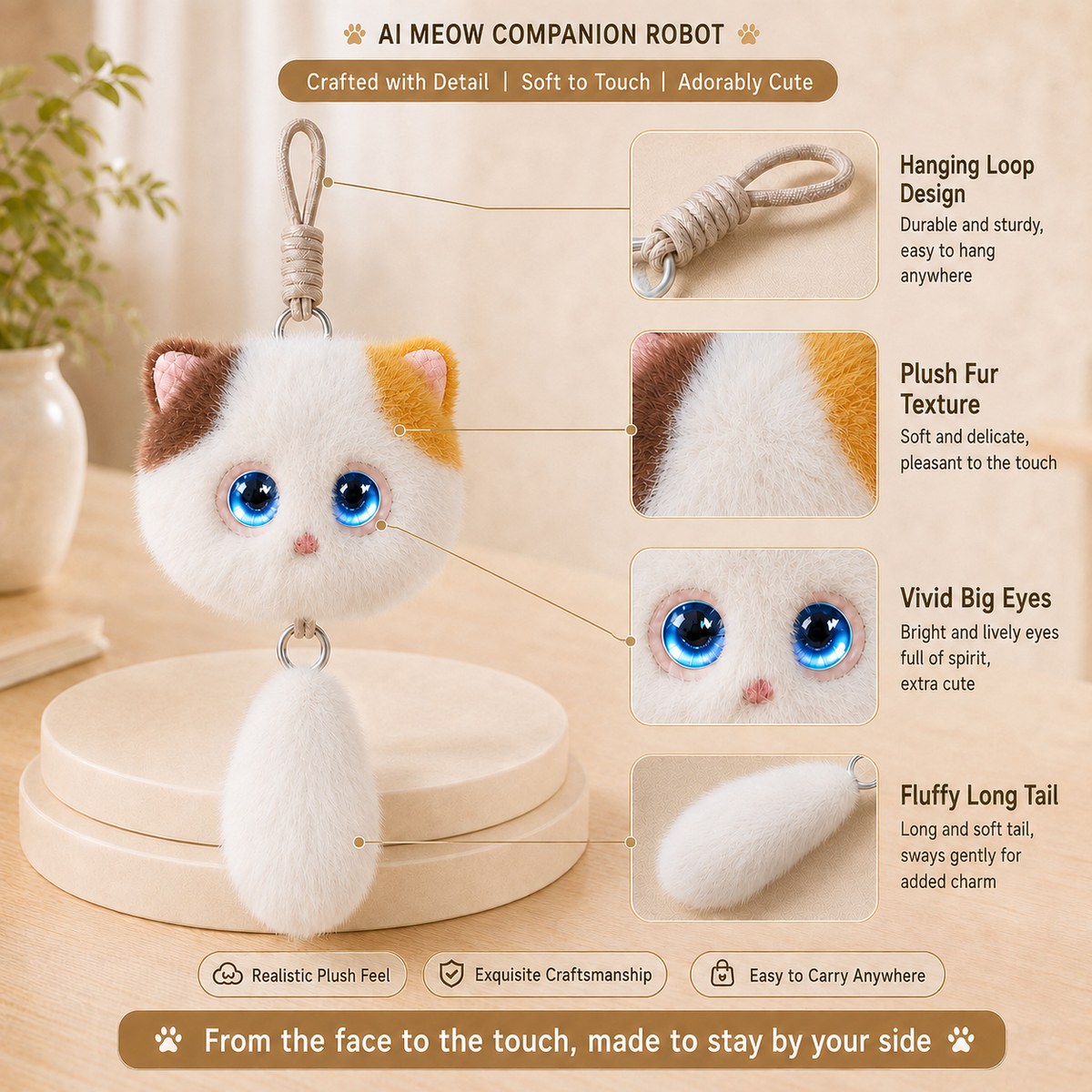
AI plush toy recalls are uncommon — which is exactly why the 2026 wave of U.S. toy recalls deserves attention from every AI plush brand. The notices do not describe exotic defects; they describe the same failure points every electronic plush carries: battery compartments a child could open, wiring that came loose, and labeling that was never there. Reading the 2026 recall notices side by side shows where electronic plush fails hardest, and what to verify before a purchase order is signed.
None of the recalled products this year were AI plush toys. That is the point. The enforcement action landed on simpler battery-operated toys — headbands, pet cage toys, light-up novelties — and exposed basic engineering discipline that failed. An AI companion plush has more electronics, more wiring, and more battery management than any of those products. If the simple products failed, the complex ones need stronger controls, not weaker ones.
Battery Compartments: The Pattern Behind the 2026 Recalls
The dominant theme in the 2026 recall notices is the button cell battery compartment. In May 2026, ABC Trading recalled about 84,700 units of electronic pet toys after the U.S. Consumer Product Safety Commission found the compartments holding button cell batteries could be opened easily by children. Separately, Cade California Electronic recalled roughly 179,739 finger light toys sold on Amazon because three button cell batteries inside were accessible to children, and ZMC Group recalled a range of battery-operated light-up toys for the same ingestion hazard.
All three cases cite the same violation: the toys fail the mandatory standard for toys because battery compartments must not be openable without a tool, and batteries that fit wholly within the small parts cylinder must not be removable without a tool. Swallowed button cell batteries can cause internal chemical burns and death within hours — regulators treat this as a hard line, not a guideline.
For AI plush toys, the implication is direct. A modern AI companion carries a rechargeable lithium battery, a Type-C charging port, a speaker, a microphone, and a voice processing board — all inside a soft plush body. The battery bay door, the charging port area, and the service access panel are the structural equivalents of the compartments that triggered the 2026 recalls. Every one of them should require a tool to open, survive torque and tension testing, and be documented in the test report — not assumed safe because “it is inside the plush.”
What AI Plush Toy Recalls Teach About Wiring and Internal Parts
Beyond batteries, recall notices consistently flag internal parts: wires that detach, solder joints that fail, and small components that break loose and become choking hazards. Electronic toys that combine fabric, electronics, and sound are particularly exposed, because the wiring loom has to survive the same squeezing, pulling, and washing-adjacent handling that a child applies to any plush toy.
An AI plush makes this worse in two ways. First, there is more wire: microphones and speakers are mounted at opposite ends of the plush, which means longer runs through the stuffing. Second, the electronics are heavier: a voice board and a battery module add mass that tugs on connectors during play. Before mass production, buyers should require the factory to show wiring pull-test results, strain relief at every connector, and a sealed internal electronics box so that even if a seam opens, no live part is directly accessible.
This is also why a pre-shipment inspection protocol for AI plush toys should include seam strength and function testing of every electronic pathway, not just a visual check. Our guide on how to inspect AI plush toys before shipment walks through what that inspection should cover, from battery bay security to voice function checks.
Labeling, Traceability, and Documentation Gaps
The third lesson from the 2026 recalls is paperwork. Recall notices routinely reference missing or inadequate labeling: no age grading, no battery ingestion warnings, and no tracking label identifying the manufacturer, production date, and batch. Under U.S. rules, tracking labels must appear on both the product and the packaging, and the Children’s Product Certificate (CPC) must be in English and cite every applicable rule, standard, and ban.
For brands, documentation is what separates a controlled recall from a crisis. If a batch-level defect is found after shipment, the factory must be able to trace which units shipped where. That requires batch numbering in the production record, a tracking label on every unit, and a retained test report from a CPSC-accepted laboratory — for ASTM F963 and CPSIA lead and phthalate limits at minimum. A supplier that cannot produce these documents for a previous order cannot be trusted to produce them for the next one.
The compliance baseline is summarized in our overview of AI plush toy safety across CPSIA, EN 71, and ASTM F963, which maps the testing requirements to the electronic plush category specifically.
What Buyers Should Demand from the Factory
Translate the recall lessons into a short set of factory requirements before placing an order:
- Every battery compartment and service panel requires a tool to open, with torque and tension test records on file.
- Wiring has strain relief at all connectors; the electronics sit in a sealed internal box behind the plush seam.
- Third-party test reports from a CPSC-accepted lab cover ASTM F963, CPSIA lead and phthalates, and small parts — not just fabric flammability.
- Each unit carries a tracking label (manufacturer, production date, batch number) on both the product and packaging.
- The factory retains batch-level production records so a field issue can be traced to a specific production run.
These are manufacturing disciplines, not marketing claims. Aslan Technology operates a 15,000 m² facility with 10 years of plush manufacturing experience, annual capacity of 250,000 units and annual exports of 70,000 units, and battery bay design, wiring strain relief, and batch traceability are built into the production process rather than added at the inspection stage.
The 2026 recalls are a reminder that regulators act on the basics. Brands that verify the basics before production — tool-secured compartments, protected wiring, traceable labeling — rarely appear in recall notices at all. If you are evaluating an AI plush program for your market, send us your target market, applicable standards, and expected order volume, and we will confirm compliance requirements and production capacity for your timeline.

