

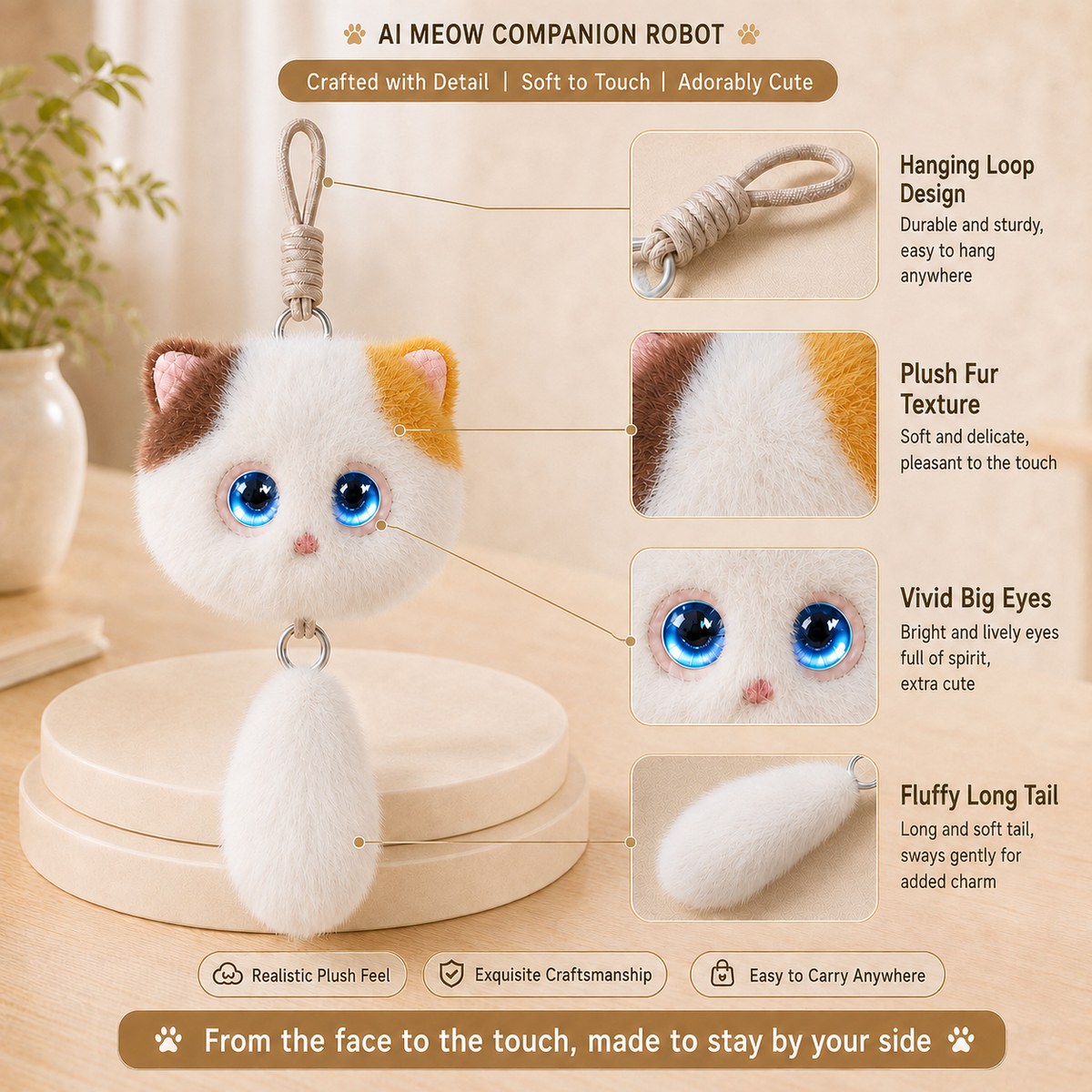
AI plush vending machine programs fail for a simple reason: they try to sell a conversation at a price set for a trinket. Vending and capsule channels work on impulse, low friction, and repeat visits, and the capsule collectibles market shows why: sealed, serialized items turn one small purchase into a reason to return for the next one. An AI plush cannot be squeezed into that model unchanged. It needs a simplified product, a price a passer-by will accept without thinking, and a machine format that explains itself in seconds.
What an AI plush vending machine product must sacrifice
The first sacrifice is complexity. A full-featured AI companion, with multi-language conversation, long-term memory, and cloud services, is the wrong product for a vending slot. The vending version should do one thing well: a short greeting, a simple conversation, or a character voice that works out of the box. Buyers should define that single job before discussing hardware, because every extra feature adds cost, battery demand, and support questions that a vending operator cannot answer at the machine.
The second sacrifice is price architecture. Capsule and vending buyers decide in seconds, and the price must feel like a small treat rather than a considered purchase. That usually means a smaller plush, a simplified electronics module, and packaging that fits the machine’s dimensions and price ladder. Operators should also plan the restock math: how many units fit per column or capsule batch, how often the machine is serviced, and what sell-through rate justifies a second machine in the same location. A product that sells out in a day but cannot be restocked for a month loses the repeat-visit effect that makes the channel work.
Blind-box formats and the honesty problem
Blind-box and capsule formats are natural partners for vending, because surprise drives repeat purchase. For AI plush, the surprise should be the character, the colour, or the voice line, not whether the electronics work. Buyers should insist that every variant in a blind-box series meets the same functional standard, and that the odds or contents of a series are disclosed where local rules require it. A customer who opens a rare character that does not talk will not buy a second capsule, and a customer who feels misled will not return to the machine.
Placement is the other half of the model. Vending performs where foot traffic is already high and dwell time is short: malls, cinemas, family entertainment centres, transport hubs, and large-format retail. Each location has different rules on power, servicing, and age-appropriate products, so buyers should confirm machine requirements, payment options, and who handles returns before committing stock. A talking toy sold from a machine still needs a support path, even if that path is a QR code on the box and a simple replacement process.
Designing the vending version
- One clear play job: a greeting, a short conversation, or a character voice, not a full companion feature set.
- A size and price that fit the machine and feel like an impulse buy, not a retail purchase.
- Identical electronics across every variant in a blind-box series, so surprise never means a faulty unit.
- Packaging that shows the character, the price, and the first-use steps at a glance.
- A restock plan tied to servicing visits, so a sold-out machine does not sit empty.
Operators should also think about what the vending product leads to. A simplified AI plush can introduce a brand to a customer who would never walk into a toy shop for it, and that customer may later buy the full companion version online or in retail. That only works if the vending version is honest about what it is: a smaller, simpler companion, not a cheaper version of the flagship. The same honesty applies across channels: corporate gift programs succeed when the product matches the occasion, and private label programs show how branding and packaging carry a product into a new channel.
Questions to put in the first brief
- What single play job will the vending version perform, and what features are deliberately left out?
- What price point and machine format are you targeting, and what dimensions must the packaging meet?
- How many units fit per restock, and how often will the machine be serviced?
- How are blind-box variants disclosed, and is electronics quality identical across the series?
- What support and replacement path will a vending customer use?
Vending rewards products that respect the channel: small, simple, and honest about what they do. Build the vending version as its own product, not as a discounted flagship, and the machine becomes a discovery channel rather than a clearance bin. If you are planning a vending or capsule program, tell us your target market, your machine format and price point, and the order quantity you have in mind, and we will advise on the simplified module, sampling, and production. Aslan Technology operates a 15,000 m² facility with an annual capacity of 250,000 units and 10 years of manufacturing experience, so pilot batches and scale-up runs can be planned in sequence.

